
Disclaimer: This article is for informational purposes only. Net worth figures are estimates based on publicly available sources such as Forbes and business filings. Actual wealth may vary.
Who Is Bijan Tehrani?
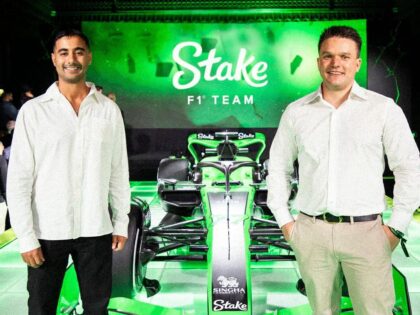
Bijan Tehrani is an American-born Australian entrepreneur who, alongside his childhood friend Ed Craven, co-founded Stake.com, widely considered the world’s largest crypto-backed online casino. He is also a co-founder of the live streaming platform Kick, which has emerged as a significant competitor to Twitch. In 2026, Forbes estimated Tehrani’s net worth at approximately US$2.8 billion, placing him among the youngest self-made billionaires in Australia.
Overview of the Entrepreneur
Tehrani’s journey from a teenager playing online games to a billionaire tech founder is a story of timing, technical curiosity, and an appetite for risk. He and Craven built their empire on the premise that crypto gambling could be transparent, fast, and community-driven—a radical departure from the opaque online casinos of the early 2010s.
How Bijan Tehrani Met Ed Craven
The partnership began in the virtual world of the fantasy role-playing game RuneScape around 2010. Craven, 15, was in Coffs Harbour, Australia; Tehrani, 17, was in Connecticut. They bonded over their fascination with in-game economies and the mechanics of “staking”—wagering virtual items—and soon began discussing how these concepts might translate to real-world value. For more on their early collaboration, see the CasinoBeats feature on Ed Craven.
The RuneScape Origins
Their first joint project was a dice game called Primedice, launched in 2013. Built during their late teens, it allowed users to bet Bitcoin on dice outcomes. The site was buggy and had security flaws—one exploit cost them 2,400 Bitcoin—but it taught them invaluable lessons about bankroll management, trust, and community. The name “Stake” later honoured those RuneScape origins.
From Gamers to Billionaires
In 2017, Tehrani moved to Melbourne to formally launch Stake.com. Within seven years, they had built a business generating US$4.7 billion in gross gaming revenue (2024). Their success was fuelled by aggressive marketing—sponsorships with Drake, UFC, Formula 1, and Everton FC—and the launch of Kick, which they built after Twitch banned gambling streams. For a detailed profile, visit the Forbes page on Bijan Tehrani.
Bijan Tehrani Net Worth & Wealth
Tehrani’s wealth has grown in lockstep with the explosive expansion of Stake.com and Kick. While exact figures are private, business filings and industry reporting provide a clear picture.
Current Net Worth Estimates (Forbes)
As of March 2026, Forbes estimates bijan tehrani net worth at US$2.8 billion, identical to his partner Ed Craven. This places them among Australia’s 50 richest individuals. The valuation is based on their combined equity in Stake, Kick, and their software company Easygo Solutions.
Source of Wealth: Stake.com and Kick
The primary driver of Tehrani’s wealth is Stake.com. The platform reported gross gaming revenue of $4.7 billion in 2024, up 80% from two years prior. Stake’s business model relies on a low house edge (often 1% or less) and high-volume betting, predominantly in cryptocurrencies like Bitcoin, Ethereum, and USDT.
Kick, launched in late 2022, is a secondary but fast-growing asset. Though not yet profitable, it has captured approximately 12% of the live streaming market, particularly in Latin America and the Middle East/North Africa (MENA) regions.
Real Estate and Assets
Tehrani and Craven are known for their high-end property acquisitions. While Craven’s Toorak “ghost mansion” (purchased for $88 million) made headlines, Tehrani has also invested significantly in Melbourne real estate. Both maintain residences in the city, where their companies are headquartered.
Comparison with Ed Craven
The two entrepreneurs’ wealth is effectively symmetrical—both hold equal stakes in their joint ventures. Edward Craven is often the more publicly visible partner, largely due to his prominent role in Kick’s launch and his property purchases, but Tehrani is equally involved in strategy, operations, and compliance. Their partnership is often described as complementary: Craven tends to focus on product and vision; Tehrani on business development and scaling.
Early Life and Background
Understanding Tehrani’s roots provides context for his entrepreneurial drive and risk tolerance.
Birth and Upbringing
Bijan Tehrani was born in the United States to Iranian parents who fled the 1979 revolution. His family eventually settled in Connecticut, where he spent most of his childhood. He has described his parents as hardworking refugees who instilled in him the value of seizing opportunity.
Education and Early Interests
Tehrani studied economics and business at university but struggled to balance academics with his growing interest in online ventures. His grades suffered as he and Craven devoted more time to Primedice. Like many founders, he eventually left formal education to pursue the business full time.
Move to Australia
In mid-2016, Tehrani flew to Sydney for a gambling conference with the intention of staying only a few weeks. Craven showed him around Melbourne, secured an office, and persuaded him to relocate permanently. Tehrani never returned to New York. He became a resident of Australia, where he has since built his business empire.
Iranian Refugee Family Background
Tehrani’s heritage is an important part of his story. His parents’ experience as refugees shaped his perspective on risk, opportunity, and building something from nothing. He has spoken rarely about his family, but their influence is evident in his determination and focus.
The Journey to Stake Casino
The road to stake casino was paved with years of experimentation, failure, and eventual breakthrough.
Primedice: The First Crypto Gambling Venture
Launched in February 2013, Primedice was a simple dice game where users could bet Bitcoin with a provably fair random number generator. At the time, Bitcoin was worth around US$20. The site quickly gained a following on crypto forums. However, it was plagued with technical issues, including a major exploit that cost the founders 2,400 Bitcoin (worth over US$380 million today). They manually resolved disputes and paid back affected users, building a reputation for fairness that later became a cornerstone of Stake’s brand.
Launch of Stake.com in 2017
By 2017, the pair had refined their approach. They founded Easygo Solutions as a software company in Melbourne and launched Stake.com under a Curaçao licence. The platform offered a full suite of casino games—slots, table games, live dealer—all using provably fair technology and accepting cryptocurrencies. Initially, growth was slow; Tehrani later admitted the launch “was a flop.” But they iterated based on user feedback, improved the interface, and began attracting a loyal user base.
Early Challenges and Bitcoin Market Volatility
The timing was both fortuitous and risky. Bitcoin’s price surged from under US$1,000 to nearly US$20,000 in late 2017, but then crashed. The founders had largely sold their Bitcoin holdings to fund the business, missing the peak. Tehrani described the period as “a lot of pressure.” However, the volatility also drove new users to crypto gambling platforms seeking quick returns.
Provably Fair Technology and Trust
Stake’s key innovation was its commitment to transparency. The platform allowed users to verify each bet’s randomness using cryptographic hashes—a feature that appealed to a tech-savvy demographic sceptical of traditional online casinos. This built trust in an industry often associated with opaque practices.
Gross Gaming Revenue Growth ($4.7 billion in 2024)
By 2020, Stake was generating US$105 million in gross gaming revenue. The pandemic, combined with aggressive marketing on Twitch, propelled it to US$2 billion by 2022. In 2024, revenue reached US$4.7 billion, despite being unavailable in Australia, the United States, the United Kingdom, and much of Europe. The platform now claims that between 2% and 4% of all Bitcoin transactions involve Stake.
Stake Casino Business Model
The success of bijan tehrani stake is built on a distinctive business model that prioritises volume over margin and brand awareness over traditional advertising.
Crypto-First Approach
Stake was designed from the ground up for cryptocurrency users. Deposits and withdrawals are near-instant, with no bank-side delays. The platform supports Bitcoin, Ethereum, Litecoin, and a range of stablecoins. This approach appealed to early crypto adopters and continues to attract users seeking fast, private transactions.
Low House Edge Strategy
While many online casinos operate with house edges of 5% or more, Stake set its house edge at just 1% on its original dice game and maintains low margins across its offerings. The philosophy is simple: players who feel they are getting a fair deal will play longer and return more often. Tehrani has stated that the goal is “building a long-term relationship with our clients.”
High-Profile Sponsorships (Drake, UFC, F1, Everton)
Stake’s marketing strategy is unusually aggressive for a crypto casino. Key sponsorships include:
- Drake: A reported US$100 million deal that saw the rapper livestream his bets to millions of followers, dubbed the “Drake effect.”
- UFC: Sponsorship of multiple fighters and octagon branding.
- Formula 1: Title sponsorship of the Alfa Romeo team, rebranded as “Stake F1 Team Kick Sauber” in a US$100 million deal.
- Everton FC: Shirt sponsorship for the English Premier League club.
These deals have elevated Stake from a niche crypto site to a mainstream brand name.
Marketing and Influencer Strategy
During the pandemic, Stake began paying Twitch streamers to livestream their gambling sessions. This created a new category of content and drove exponential user growth. When Twitch banned gambling streams in September 2022—specifically citing Stake—the founders saw it as an opportunity rather than a setback.
Kick Streaming Platform
The launch of Kick in late 2022 was a direct response to Twitch’s ban and a bet that the streaming market was ripe for disruption.
Why They Launched Kick
Twitch had long dominated the live streaming space, taking up to 50% of creator revenue and enforcing content policies that creators found arbitrary. When Twitch announced a ban on gambling streams, it specifically targeted Stake, citing “lack of consumer protections.” Tehrani described the decision as arbitrary and unfair. Rather than accept the loss of a key marketing channel, they decided to build their own.
The Twitch Ban and Opportunity
The timing was opportune. Twitch’s creator revenue share was a growing point of tension, and the gambling ban alienated a significant segment of the platform. Kick launched with a dramatically different model: creators keep 95% of subscription revenue, with no exclusivity requirements. The platform also allowed gambling streams, subject to its own moderation policies.
95% Revenue Share for Creators
The 95% revenue share was a deliberate shock to the market. Tehrani later admitted the figure was “something we just put in there,” not derived from a detailed financial model. It created a grassroots movement among creators frustrated with Twitch’s economics and moderation. Within two years, Kick had captured 12% of the live streaming market.
Competition with Twitch and YouTube
Kick now competes directly with Twitch and YouTube Gaming. Its growth has been particularly strong in Latin America and MENA regions, where local creators like Spreen (Spanish Minecraft streamer) and Maherco (Arabic streamer) have built massive audiences. While Kick’s total view hours (2.3 billion in 2024) lag behind Twitch (20 billion) and YouTube (52 billion), it has established itself as the clear fourth-place player.
Global Expansion (Latin America, MENA)
The company’s international strategy differs from its competitors. Rather than focusing on North America and Europe, Kick prioritised markets where Twitch’s presence was less dominant and where local creators could be attracted with better terms. This approach has paid off, with the platform seeing significant growth in Brazil, Colombia, and the Middle East.
Bijan Tehrani and Ed Craven Partnership
The Tehrani–Craven partnership is one of the most successful in modern tech. Their complementary skills and shared vision have been central to their success.
How They Met Online
Their friendship began in the early 2010s on RuneScape. They bonded over the game’s “staking” mechanic—a high-stakes duel where players wagered virtual items. This sparked their interest in the psychology of wagering and the mechanics of trust in online communities.
Complementary Skills
Craven is often described as the visionary, focused on product, technology, and user experience. Tehrani is the operator, focused on business development, compliance, and scaling. Together, they have built two major platforms from the ground up, navigating technical challenges, regulatory scrutiny, and competitive markets.
Shared Vision and Risk Appetite
Both founders share a high tolerance for risk and a willingness to move fast. They reinvest profits back into the business rather than cashing out. Their decision to launch Kick, despite the enormous costs and the failure of previous entrants like Microsoft’s Mixer, reflects this shared appetite for disruption.
Leadership Roles at Stake and Kick
While both are involved across both companies, Craven tends to focus more on Kick’s day-to-day operations, while Tehrani oversees much of Stake’s strategic direction. Both remain deeply engaged in product decisions and compliance matters.
Challenges and Controversies
Operating a crypto casino that reaches a global audience inevitably invites regulatory and reputational scrutiny.
Regulatory Scrutiny in the US and UK
Stake does not accept players from Australia, the United States, or the United Kingdom. However, in 2025, several US states—including Illinois and California—issued cease-and-desist letters or filed lawsuits alleging that the platform was accepting US players through VPNs and other means. The company has denied wrongdoing and has taken steps to geoblock those jurisdictions more tightly.
KYC and AML Compliance Issues
Stake has acknowledged past shortcomings in its know-your-customer (KYC) and anti-money laundering (AML) procedures. The company has since invested heavily in compliance staff and systems, particularly in regulated markets like the UK (where it briefly operated before withdrawing) and the EU.
Drake Feud and Public Fallout
In 2025, a public feud erupted between Drake and Stake. The rapper, who reportedly had a US$100 million sponsorship deal, deleted his social media accounts after a series of critical tweets about the platform. Stake stated that Drake had not lost money and that the dispute was about contract terms rather than gambling losses. The episode highlighted the risks of high-profile celebrity partnerships.
Bonnie Blue Advertising Controversy
In 2024, Stake withdrew from the UK market following a controversial advertising campaign involving adult entertainer Bonnie Blue. The company stated that it was not involved in creating the ads and decided to focus on “jurisdictions with clearer regulations.” The incident damaged Stake’s reputation in the UK and led to increased regulatory scrutiny.
Responsible Gambling Improvements
The company has publicly acknowledged that it has not always met the highest standards of responsible gambling. In response, it has implemented stricter deposit limits, enhanced self-exclusion tools, and increased investment in player protection measures. Tehrani has stated that responsible gambling is a priority and that the company is committed to continuous improvement.
Future Outlook
Neither Tehrani nor Craven shows signs of slowing down. Their ambitions extend well beyond their current ventures.
Expansion into Regulated Markets
Stake is actively pursuing licences in regulated markets, including Brazil, Peru, and several European countries. The company has hired a dedicated compliance team and is working to meet local requirements. A move into the US market, possibly through partnerships with land-based casinos, remains a long-term goal.
Kick Growth Strategy
Kick’s focus is on expanding its international footprint and improving platform features. The company is investing in esports, live event broadcasts, and original content to attract a broader audience. Monetisation remains a challenge—Twitch has never turned a profit—but Tehrani has stated that growth is the priority for now.
Web3 and Crypto Innovations
Both platforms are exploring deeper Web3 integration, including seamless cross-platform wallets and blockchain-based verification systems. Stake already uses provably fair technology; future iterations may incorporate on-chain settlement and decentralised identity tools.
Legacy and Industry Impact
Tehrani and Craven have fundamentally changed the online gambling and streaming industries. They proved that a crypto-first casino could achieve mainstream scale, and they built a streaming platform that challenged a near-monopoly. As they enter their thirties, their legacy—and their next moves—remain subjects of intense interest.
Frequently Asked Questions
What is Bijan Tehrani net worth?
As of March 2026, Forbes estimates bijan tehrani net worth at approximately US$2.8 billion, placing him among Australia’s 50 richest individuals. His wealth is derived primarily from his co-ownership of Stake.com and Kick.
Who is the founder of Stake casino?
Stake casino was co-founded by Bijan Tehrani and Ed Craven. The pair launched the platform in 2017 after earlier ventures including the Bitcoin dice game Primedice. They continue to run the company from their headquarters in Melbourne, Australia.
What is Kick streaming platform?
Kick is a live streaming platform co-founded by Bijan Tehrani and Ed Craven in late 2022. It competes with Twitch and YouTube by offering creators a 95% revenue share and fewer content restrictions. It has grown rapidly, particularly in Latin America and MENA regions.
How did Bijan Tehrani make his money?
Tehrani built his fortune through crypto gambling. He and Craven launched Primedice in 2013, then Stake.com in 2017, which became the world’s largest crypto casino. They later founded Kick, a streaming platform, and continue to reinvest profits into their businesses.
Are Bijan Tehrani and Ed Craven still partners?
Yes. Tehrani and Craven remain business partners and close friends. They co-own Stake.com, Kick, and their software company Easygo Solutions. Both are actively involved in strategy and operations.