
Disclaimer: This article is for informational purposes only. Promotional terms and conditions vary by campaign. Always check the official rules before participating in any spin-to-win promotion.
What Is Spin to Win? Overview of the Game Format
The spin to win format has become one of the most popular engagement tools in retail, marketing, and digital promotions. At its core, it’s a simple concept: a virtual wheel that users spin for a chance to win prizes. But behind that simplicity lies a sophisticated gamification strategy that drives customer loyalty, captures data, and creates memorable brand experiences.
Definition and Core Concept
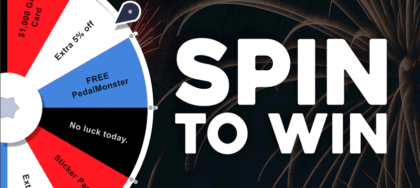
A spin to win promotion is a gamified marketing tool where users interact with a virtual wheel divided into segments (or “wedges”), each representing a possible outcome. The user initiates a spin, the wheel rotates, and the segment that lands under the pointer determines the prize. Prizes can range from discount vouchers and gift cards to physical merchandise or loyalty points.
History of Spin-to-Win Promotions
The spin wheel format traces its origins to physical prize wheels used at carnivals, trade shows, and retail events. With the rise of digital marketing, brands adapted the mechanic for online use. Early iterations were simple Flash-based widgets. Today, platforms like Komo’s Spin to Win tool allow brands to build fully customisable, mobile-optimised wheels with advanced features like data capture, prize limits, and automated communications.
Why Brands Use Spin-to-Win Mechanics
The format works because it taps into fundamental human psychology: the thrill of chance, the anticipation of a reveal, and the dopamine hit of winning—even a small prize. For brands, the value proposition includes:
- Data capture: Users typically provide contact details before spinning
- Increased foot traffic: In-store redemptions drive visits
- Loyalty reinforcement: Exclusive spins for loyalty members
- Social sharing: Winners often share their success, amplifying reach
Mobile and Digital Evolution
Modern spin to win promotions are built for mobile first. They integrate with SMS verification, digital wallets, and QR codes on receipts. The Ritchies supermarket campaign, for example, uses smartphone scanning of in-store receipts to enter, with vouchers stored in a digital wallet accessible via mobile browser.
How Spin to Win Promotions Work
While the user experience is simple—spin, win, claim—the underlying mechanics involve careful planning of entry rules, prize structures, and redemption flows.
Entry Mechanics: Purchase Requirements, Free Plays, Daily Limits
Most retail spin to win campaigns require a minimum spend to qualify for a spin. In the Ritchies Spin to Win promotion, customers spend $30 or more in a single transaction at a supermarket or liquor store to receive a QR code on their receipt. Scanning the code grants one spin per calendar day. Loyalty members receive a second chance spin if their first spin is a non-winner.
Other campaigns offer daily free plays without purchase to drive repeat engagement. The key is balancing accessibility with commercial objectives.
Prize Structures: Vouchers, Gift Cards, Physical Prizes
Prizes are typically tiered to create excitement while managing budget. The Ritchies promotion distributed over 10,000 prizes across four weeks, with values ranging from $5 store vouchers to $200 gift cards from BCF, Visa, and Mecca. Higher-value prizes are rarer, with the probability weighted accordingly. In the Komo platform, brands set percentage probabilities for each prize wedge, ensuring the prize pool lasts the full campaign duration.
Redemption Process: Digital Wallets, In-Store Collection
Redemption mechanisms vary by prize type:
- Store vouchers: Typically digital codes that must be presented live at checkout. Ritchies vouchers are accessed through a Prize Wallet and must be redeemed within 5 minutes of tapping “Redeem”—screenshots are not accepted. This prevents fraud and ensures the voucher is used by the rightful winner.
- Gift cards: Often require in-store collection. Winners select a pickup location, and the card is available within 10 working days.
- Physical merchandise: May require shipping address collection via an extra data capture form triggered after the win.
Expiry and Unclaimed Prize Policies
Time limits create urgency. In the Ritchies campaign, store vouchers expire 7 days after being won. Unclaimed prizes are void—no additional draws are held. Gift cards generally have longer expiry periods (up to 3 years). Clear communication of expiry dates is critical to avoid customer frustration.
Retail Spin to Win Campaigns in Australia
Australian retailers have embraced spin to win as a versatile promotional tool. Here are notable examples.
Ritchies Spin to Win: Supermarket Loyalty Promotion
Ritchies, a supermarket and liquor chain operating in Victoria, New South Wales, and Queensland, ran a spin to win campaign from August to September 2025. The $80,000 prize pool included over 10,000 Ritchies vouchers and 70 gift cards. Key mechanics included a $30 spend trigger, one free daily spin for all customers, and a second chance spin for loyalty members. Vouchers were stored in a digital wallet and redeemed in-store via a live code system.
Harvey Norman Spin to Win: Electronics Retail Campaign
Electronics giant Harvey Norman has run multiple harvey norman spin to win campaigns, often tied to seasonal sales or product launches. These promotions typically offer vouchers redeemable in-store or online, with entry via purchase or online form. The brand uses spin-to-win mechanics to drive traffic during key sales periods like Boxing Day or EOFY.
Cellarbrations Spin to Win: Liquor Store Engagement
Liquor retailer cellarbrations spin to win campaigns have appeared across various franchise locations. Like Ritchies, these often tie spins to a minimum purchase (typically $30–$50) and reward customers with vouchers for future purchases. The alcohol retail sector uses spin-to-win to encourage repeat visits and promote high-margin products.
The West Spin to Win: Media Publisher Promotions
Australian media outlet the west spin to win promotions appear in The West Australian newspaper and its digital platforms. These campaigns often offer subscriptions, event tickets, or gift cards as prizes. Media publishers use spin-to-win to drive digital engagement and capture subscriber data.
Betta Spin to Win: Home Appliances Giveaways
Home appliance retailer betta spin to win campaigns are typically run in partnership with suppliers or during major sales events. Prizes may include store credit, discounted products, or entry into larger giveaways. The format helps Betta differentiate in a competitive retail category.
Technical Implementation of Spin to Win
For businesses looking to run their own spin to win promotion, understanding the technical setup is essential.
Platforms and Tools (Komo, Custom Solutions)
Specialised gamification platforms simplify the process. Komo’s Spin to Win tool provides a no-code builder where marketers can design the wheel, set up data capture forms, configure prize probabilities and limits, and style the interface to match brand colours. The platform handles SMS and email communications automatically when a prize is won. Larger enterprises may opt for custom-built solutions integrated with their loyalty systems.
Setting Up Wedges and Probabilities
Each wedge on the wheel represents a possible outcome. In the Komo platform, marketers:
- Add results (wedges) with internal names for tracking
- Set the number of times each wedge repeats on the wheel
- Assign percentage probabilities for each outcome
- Configure prize limits (maximum number of times a prize can be won)
If a prize limit is reached, its probability automatically reverts to the failure screen (non-winning outcome), ensuring the prize pool isn’t oversubscribed.
Data Capture and User Registration
Most spin to win promotions require user registration to claim prizes. Data capture fields typically include name, email, mobile number, and loyalty membership number. This data fuels remarketing campaigns and builds customer profiles. For prize-specific needs (like shipping physical items), additional data capture forms can be triggered only when a user lands on a winning wedge.
Prize Limits and Allocation Management
Managing prize inventory is critical. Campaigns with fixed prize pools must ensure allocations are tracked in real time. In the Komo platform, marketers set maximum win counts for each prize. Once reached, that prize becomes unavailable, and any remaining probability weight shifts to the fallback outcome. This prevents scenarios where a prize is advertised but no longer available.
Analytics and Performance Tracking
After launch, campaign analytics reveal:
- Number of spins
- Win rate per prize tier
- Data capture conversion rates
- Most engaged user segments
- Prize pool depletion rates
These insights inform future campaign design and budget allocation.
Gamification and User Engagement
The success of spin to win lies in its psychological appeal and its ability to create repeat engagement.
Psychology Behind Spin-to-Win Mechanics
The anticipation of a spin, the visual excitement of the wheel stopping, and the instant gratification of a win all trigger dopamine release. Even small wins create positive associations with the brand. The near-miss effect (landing just before a big prize) can actually increase motivation to play again—a principle well understood in gambling but applied ethically in marketing.
Daily Plays and Retention Strategies
Offering one free spin per day (as Ritchies does) encourages users to return repeatedly. Each visit is an opportunity for the brand to reinforce its message and for the user to potentially win again. Loyalty members who receive second chances have additional incentive to register.
Second Chance Mechanics for Loyalty Members
Rewarding loyalty members with a second spin if their first is a non-winner creates a tangible benefit for joining the loyalty program. This drives sign-ups without requiring a purchase beyond the initial spin qualification. In Ritchies’ case, loyalty members who enter their membership number during the spin receive an extra chance to win—a low-cost, high-impact loyalty driver.
Push Notifications and Reminders
Mobile-optimised campaigns can send push notifications to remind users of expiring prizes or to announce new spins available. SMS reminders for voucher expiry (e.g., “Your $5 Ritchies voucher expires tomorrow”) drive store visits and prevent prize wastage.
Spin to Win in Casino and Gambling Context
The spin to win format also appears in online gambling, though with different mechanics and stakes. Understanding this context helps distinguish promotional gaming from real-money wagering.
Stake.com and Ed Craven: How Spin-to-Win Evolved
The founders of crypto casino Stake.com, Ed Craven and Bijan Tehrani, built their empire on gamified betting mechanics. Their journey began with a simple dice game (Primedice) and evolved into a multi-billion-dollar platform. According to Forbes Australia’s profile of Ed Craven, the pair met playing RuneScape as teenagers and launched Primedice in 2013, which functioned as a basic spin to win-style betting game using Bitcoin. Today, Stake.com incorporates wheel spins, bonus rounds, and other gamified elements within its crypto casino platform.
How to Win Roulette Every Spin: Reality vs Myth
The search term “how to win roulette every spin” reflects a common misconception. Roulette is a game of pure chance with a fixed house edge. No strategy can guarantee a win on every spin. In European roulette, the house edge is 2.7%; in American roulette (with double zero), it’s 5.26%. Any claim of a guaranteed winning system is false. Responsible players understand that gambling outcomes are random and independent.
House Edge and Probability Basics
Every gambling game has a built-in mathematical advantage for the operator—the house edge. In promotional spin to win campaigns, there is no house edge; prizes are funded by marketing budgets. In gambling contexts, the house edge ensures long-term profitability for the operator. Players should understand the odds before participating.
Provably Fair Spin Mechanics
Some crypto casinos, including Stake, use “provably fair” technology that allows players to verify each spin’s randomness using cryptographic hashes. This transparency builds trust in markets where regulatory oversight may be limited. For more on the evolution of this technology and the founders behind it, see the CasinoBeats feature on Ed Craven’s net worth.
Legal and Compliance Considerations
Running a spin to win promotion in Australia involves navigating trade promotion regulations and responsible gambling guidelines.
Trade Promotion Licensing in Australia
Trade promotions (competitions where entry requires a purchase) must comply with state and territory regulations. In New South Wales, for example, Ritchies obtained licence number TP/00114 for its spin-to-win campaign. Promoters must publish terms and conditions, disclose total prize values, and comply with record-keeping requirements. Penalties for non-compliance can be significant.
Age Restrictions and Geographic Eligibility
Most promotions restrict entry to adults aged 18 and over. Geographic restrictions also apply—the Ritchies campaign was open only to residents of Victoria, New South Wales, and Queensland. Promoters must verify eligibility during data capture and clearly state restrictions in terms and conditions.
Terms and Conditions Requirements
Standard terms include:
- Entry mechanics and eligibility
- Prize descriptions and values
- Redemption processes and expiry dates
- Liability limitations
- Privacy and data handling
- Promoter details and licence numbers
Terms must be easily accessible, typically via a hyperlink near the entry point.
Responsible Gambling vs Promotional Gaming
Retail spin to win campaigns are classified as trade promotions, not gambling, because entry is based on purchase (not payment of a stake) and prizes are goods or vouchers (not cash winnings). However, the mechanics can resemble gambling. Promoters should emphasise the promotional nature, avoid language that suggests wagering, and ensure age restrictions are enforced.
Best Practices for Spin to Win Campaigns
For marketers planning a spin to win promotion, these best practices ensure compliance, engagement, and measurable ROI.
Setting Realistic Win Probabilities
Prize probabilities should align with campaign budget. If prizes are too rare, users may disengage. If too common, the prize pool may deplete early. Komo recommends setting probabilities that allow the campaign to run its full duration while maintaining a reasonable win rate (e.g., 10–20% win chance).
Communicating Prize Expiry Clearly
Expiry dates are a leading cause of customer complaints. Use countdown timers in prize wallets, send SMS reminders 24–48 hours before expiry, and clearly state expiry terms during the redemption process. Ritchies’ use of a 5-minute redemption window for vouchers is an example of tight expiry management that prevents fraud.
Mobile-First Design Principles
Most entries occur on smartphones. Ensure the wheel displays properly on small screens, buttons are large enough to tap, and data capture forms auto-detect mobile numbers. PWAs (Progressive Web Apps) that install to home screens provide a native-like experience without app store restrictions.
Integrating with Loyalty Programs
Use spin-to-win to drive loyalty sign-ups. Offer second chances, bonus spins, or higher-value prizes exclusively for members. Ensure the registration process for loyalty is seamless within the spin flow—Ritchies allows users to sign up for loyalty directly from the spin screen.
Frequently Asked Questions
How does Spin to Win work?
You spin a virtual wheel for a chance to win prizes. Entry is typically tied to a qualifying purchase or a free daily play. If you win, the prize is stored in a digital wallet or issued as a voucher for in-store or online redemption.
What is the best Spin to Win promotion in Australia?
The Ritchies Spin to Win campaign is a standout example, offering over $80,000 in prizes across four weeks. Other notable campaigns include Harvey Norman, Cellarbrations, and The West Australian promotions, each tailored to their audience and retail context.
Can I win real prizes on Spin to Win?
Yes. Retail spin-to-win promotions offer real prizes such as gift cards, store vouchers, and merchandise. These are not gambling promotions—they are trade promotions funded by marketing budgets.
Is Spin to Win legal?
Yes, provided the promotion complies with state trade promotion regulations. Promoters must hold the relevant licence, publish terms and conditions, and restrict entry to eligible participants (age and geography). Always check the official terms before entering.
How is a winner selected?
In a digital spin-to-win campaign, winners are determined instantly by the software based on pre-set probabilities. Each spin outcome is generated by the system’s random number generator, and the result is displayed immediately. Prize limits are tracked automatically.